
Lymphatic Drainage Massage in Guelph: What It Actually Does, From an RMT's Perspective
Lymphatic drainage massage has had a moment. Scroll social media for five minutes and you'll find it credited with everything from flat stomachs to "detoxing" your organs to curing chronic fatigue.
As Registered Massage Therapists, we want to give you the honest version. Manual lymphatic drainage is a real clinical technique with a genuine evidence base behind it. It is also widely oversold. Knowing the difference helps you decide whether it's the right treatment for you, and it helps you get real results when it is.
Here's what lymphatic drainage massage is, what the research actually supports, who it helps most, and who should skip it.
First, what does your lymphatic system do?
Your lymphatic system is a network of vessels and nodes that runs alongside your circulatory system. Its job is drainage and immune surveillance: it collects excess fluid, protein, cellular waste, and immune cells from your tissues, filters that fluid through lymph nodes, and returns it to your bloodstream.
Here's the important part. Unlike your circulatory system, the lymphatic system has no central pump. There's no heart pushing lymph along. Instead it relies on the gentle contraction of the lymph vessels themselves, the movement of surrounding muscles, and the pressure changes of your breathing.
That's precisely why manual technique can make a difference. When the system is damaged, congested, or overwhelmed, a trained set of hands can help move fluid in a way the body is temporarily struggling to do on its own.
What manual lymphatic drainage actually involves
Manual lymphatic drainage (MLD) was developed in the 1930s by Emil and Estrid Vodder and has been refined by clinicians ever since. It is a specific, sequenced technique, not a general massage with a wellness label attached.
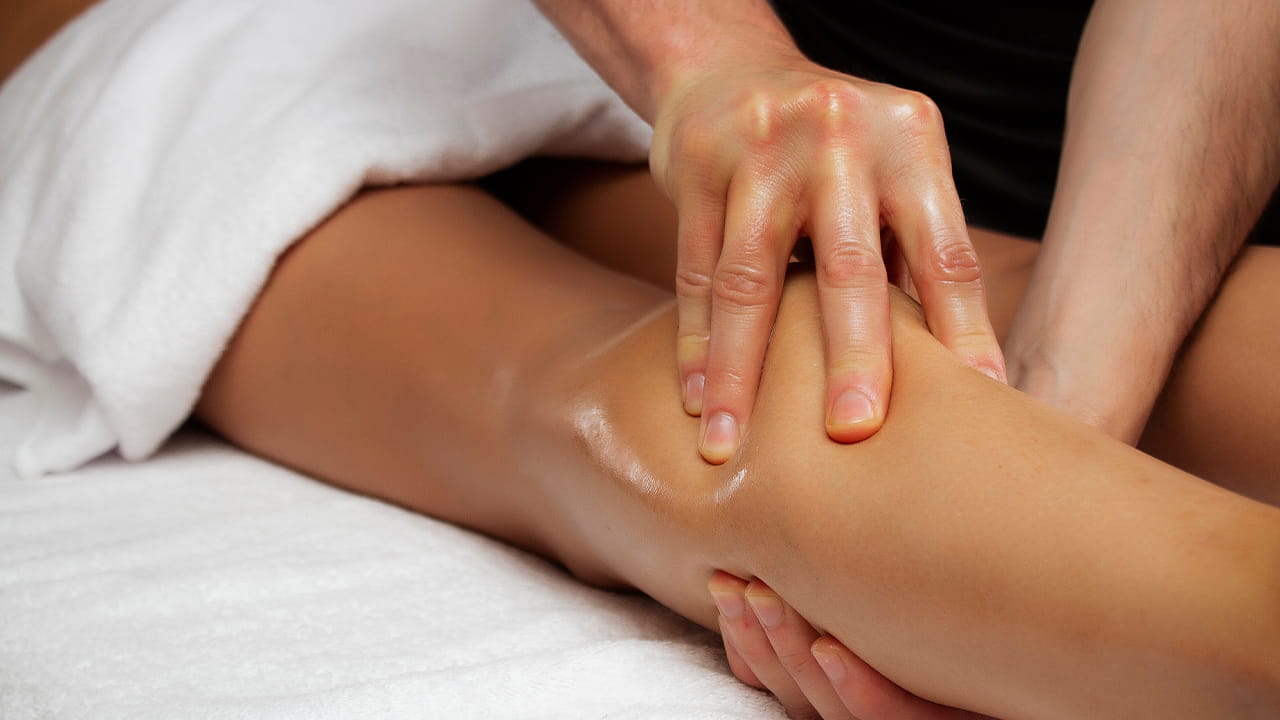
The biggest surprise for most first-time clients is how gentle it is. Lymphatic vessels sit just beneath the skin and respond to very light pressure. Push too hard and you actually collapse the vessels you're trying to stimulate. The strokes stretch and release the skin in a slow, rhythmic pattern rather than sliding over it or digging into muscle.
The sequence matters as much as the pressure. Your therapist clears the lymph nodes closest to the trunk first, essentially opening the drain, then works to move fluid from the congested area toward those cleared pathways. Doing it out of order is like mopping a floor toward a closed door.
If you come in expecting deep tissue work, this will feel almost too soft. That's the technique working as designed.
The health benefits: what the evidence actually shows
We think it's worth being specific here, because "boosts your immune system" isn't a claim anyone can help you evaluate. Here's where the support is strongest, in order.
1. Lymphedema management
This is the best-established use, and it's where MLD started clinically. Lymphedema is chronic swelling that occurs when the lymphatic system is damaged or obstructed, most commonly after cancer surgery involving lymph node removal or after radiation therapy. It affects a meaningful share of people following breast cancer surgery.
Research supports MLD as a component of care here, particularly when combined with compression therapy rather than used alone. Systematic reviews have found a statistically significant benefit when manual lymph drainage is added to compression for upper-limb swelling, and there's evidence that MLD in the early stages after breast cancer surgery may help prevent progression to clinical lymphedema. Benefits appear strongest for mild lymphedema and less clear in moderate to severe cases already managed with full decongestive therapy.
If you're living with diagnosed lymphedema, MLD should be part of a coordinated plan with your medical team, not a standalone fix.
2. Post-surgical swelling and recovery
Any surgery that disrupts tissue also disrupts local lymphatic vessels. Your body then has to clear excess fluid and inflammatory byproducts through a network that's been temporarily compromised. This is why swelling lingers.
MLD is now a routine part of recovery protocols after procedures like liposuction, abdominoplasty, body contouring, orthopedic surgery, and facial or jaw surgery. Reported benefits include faster resolution of swelling, reduced bruising as cellular debris clears more quickly, less of that tight, full, pressurized feeling in the weeks after surgery, and reduced firmness or fibrosis in treated areas.
Timing and clearance are non-negotiable. You need your surgeon's approval before starting, and early sessions typically work adjacent to incisions rather than over them.
3. Post-injury swelling and musculoskeletal recovery
Swelling after a sprain, strain, or fracture slows recovery by limiting range of motion, inhibiting muscle activation, and increasing pain. MLD is commonly used to help resolve that edema faster.
The research here is genuinely promising but thinner than we'd like. A systematic review of MLD for musculoskeletal injuries found that most included studies reported positive effects, while noting the overall evidence base isn't yet strong enough for firm conclusions. We'd call this "reasonable to try as part of a broader treatment plan" rather than "proven."
4. Chronic conditions with a fluid or pain component
MLD is used clinically for chronic venous insufficiency, lipedema, and sometimes fibromyalgia. For fibromyalgia specifically, there's moderate evidence that massage therapy generally improves sleep quality and reduces anxiety, and more limited evidence that lymph drainage specifically reduces pain.
5. Nervous system downregulation
This one rarely makes the research headlines but shows up in almost every session. Slow, rhythmic, predictable light touch is very effective at shifting your nervous system out of a stress state. Clients regularly describe MLD sessions as the deepest relaxation they've experienced on a table, and many fall asleep. If your goal is stress relief and better sleep, that's a legitimate reason to book, and we'd rather tell you that honestly than dress it up as detoxification.
What lymphatic drainage massage won't do
Being straight with you matters more to us than booking an appointment under false pretenses.
It won't cause weight loss. MLD moves fluid, not fat. You may look and feel less puffy afterward, and that effect is real, but it's fluid-related and temporary.
It won't "detox" you. Your liver and kidneys handle detoxification. There's no credible evidence that MLD in a healthy person clears toxins the body wasn't already clearing.
It won't boost a healthy immune system. If your lymphatic system is working properly, it doesn't need help doing its job. Regular movement, good hydration, and sleep do far more for it than any massage technique.
The honest summary from the clinical literature: MLD is a proven tool when something is wrong with lymphatic function or when the system is temporarily overloaded. For a healthy body, it's a genuinely relaxing treatment, not a medical intervention.
Who shouldn't book lymphatic drainage massage
MLD is very safe for most people, but there are real contraindications. Let your therapist know before booking if you have or suspect:
- Blood clots or deep vein thrombosis
- Active infection, including cellulitis
- Congestive heart failure or significant heart disease
- Kidney failure
- Active, untreated cancer in the area to be treated
- Skin that's currently damaged from radiation therapy
Mild side effects like fatigue, headache, increased urination, or nausea can happen and usually pass quickly. Tell your therapist if they do.
This is exactly the kind of screening a Registered Massage Therapist is trained to do. Your health history intake isn't a formality.
Why the "RMT" part matters in Ontario
Massage therapy has been a regulated health profession in Ontario since 1991, overseen by the College of Massage Therapists of Ontario (CMTO). "Registered Massage Therapist," "Massage Therapist," "RMT," and "MT" are all protected titles. Using them means the practitioner has completed roughly 2,200 hours of training in anatomy, physiology, pathology, and hands-on technique, passed provincial certification, and is accountable to a regulatory college.
For a technique like MLD, that training is the point. Knowing when not to treat, how to screen for contraindications, and how to work safely around a recent surgical site is what separates clinical treatment from a spa service with a similar name.
It also matters for your wallet. OHIP doesn't cover massage therapy, but most extended health benefit plans do, and insurers reimburse treatment specifically from a CMTO-registered RMT. Coverage details vary by plan, so check your annual maximum and whether your plan requires a physician's note.
At Da Estrela Wellness: we don't offer direct billing at this time, but we provide an invoice with everything you need to submit your claim.
What to expect from your session with us
Your first appointment starts with a health history and a conversation about what's bringing you in, whether that's post-surgical swelling, a diagnosed lymphatic condition, an injury, or simply wanting to feel less puffy and more rested.
From there, expect a 60-minute session of light, slow, rhythmic work. Most people find it deeply calming. Afterward, drink water, move gently, and don't be surprised if you need the washroom more often for the rest of the day. That's the fluid you moved doing what it's supposed to do.
How many sessions? It depends entirely on why you're here. For general relaxation and mild puffiness, book as it suits you. For post-surgical recovery, protocols commonly involve two to three sessions per week during the first three to four weeks. For lymphedema, the research suggests longer treatment courses produce meaningfully better results, with significant volume reduction seen when treatment extends beyond two weeks and roughly 20 sessions. One session is a nice experience; a course of care is what changes outcomes.
Book lymphatic drainage massage in Guelph
Da Estrela Wellness is a two-time Canadian Choice Award-winning registered massage therapy clinic in Guelph's west end, serving clients from Guelph, Fergus, Elora, Rockwood, Puslinch, Cambridge, and the Kitchener-Waterloo area.
Our lymphatic drainage massage is a 60-minute treatment performed by a Registered Massage Therapist, with an invoice provided for your insurance claim.
Not sure whether lymphatic drainage is the right treatment for what you're dealing with? Call us. We'd rather point you toward the right care than book you into the wrong appointment.
Frequently asked questions
Is lymphatic drainage massage covered by insurance in Ontario? OHIP doesn't cover massage therapy, but most extended health benefit plans reimburse treatment provided by a CMTO-registered RMT. Our lymphatic drainage massage is performed by an RMT, and we provide a detailed invoice you can submit to your insurer. Check your specific plan for annual limits and whether a physician's note is required.
Does lymphatic drainage massage hurt? No. It's one of the gentlest treatments we offer. The pressure is very light by design, because lymphatic vessels sit just under the skin and respond to soft, rhythmic contact rather than deep pressure.
How soon after surgery can I book? Only once your surgeon has cleared you. Timing depends on the procedure, your incision healing, and your swelling pattern. Facial procedures often allow earlier treatment than major body contouring. Bring your surgeon's guidance to your appointment and we'll work within it.
How will I feel afterward? Most people feel relaxed and lighter. Some feel tired, and increased urination over the following day is normal and expected. Occasionally people notice a mild headache. Let us know if anything feels off.
Is this the same as a regular massage? No. Relaxation and deep tissue massage target muscle and fascia with moderate to firm pressure. Lymphatic drainage targets the fluid system just beneath the skin with very light, directional, sequenced strokes. They're different treatments with different goals, and they can complement each other well.
Do I need a doctor's referral? Not to book with us. Some insurance plans require one for reimbursement, so it's worth checking with your provider. If you have a diagnosed lymphatic condition or recent surgery, we'll want to coordinate with your medical team regardless.
This article is general information from our team of Registered Massage Therapists and isn't a substitute for individualized medical advice. If you have a diagnosed lymphatic condition, a recent surgery, or any of the contraindications listed above, please speak with your physician and your RMT before booking.

Two-Time Canadian Choice Award Winner

